


Puppy's First Grooming Salon Visit: Top Dog Grooming Services Tips for a Calm, Happy Pup | Lush Pet Care

A puppy’s first grooming appointment can feel like a big milestone, and for good reason. New sounds, new smells, running water, clippers, dryers, strangers touching paws and ears, it is a lot for a young dog to take in.
The good news is that a first salon visit does not need to be stressful. With gentle preparation, the right groomer, and plenty of positive reinforcement, grooming can become a normal and even enjoyable part of a puppy’s routine.
For many puppies, the goal of the first appointment is not a perfect haircut. The real goal is a calm introduction to the grooming salon, so future visits feel familiar rather than frightening.

Start grooming practice at home before the salon visit
Puppies learn best through short, positive experiences. Waiting until salon day to introduce brushing, paw handling, or the sound of a dryer can make the appointment harder than it needs to be.
Start with a few minutes each day. Keep it simple and stop before your puppy becomes overwhelmed.
Try practising these small grooming moments at home:
Gently touch the paws, toes, ears, tail, and muzzle
Brush the coat for 30 seconds, then offer a treat
Hold the collar softly while giving praise
Lift each paw briefly, then reward calm behaviour
Play quiet recordings of dryers or clippers at a low volume
Let your puppy stand on a non-slip mat to get used to grooming-style handling
Short sessions matter more than long ones. A puppy that happily accepts 60 seconds of brushing has made better progress than one that struggles through 10 minutes.
Use treats your puppy really likes. Tiny pieces of cooked chicken, puppy-safe training treats, or a favourite soft chew can help create a positive link with being handled.
The timing of the reward matters. Give the treat while your puppy is calm, or immediately after a gentle touch. This helps them understand that stillness, patience, and trust lead to good things.
Keep the first pre-visit low pressure
Some salons offer a quick meet-and-greet before the first full appointment. If this is available, it can be helpful. Your puppy may get to sniff the entry area, meet a groomer, step on the table for a moment, and leave with a treat.
That short visit tells your puppy, “This place is safe, and nothing scary happens here.”
If a pre-visit is not possible, take your puppy for a calm walk before the appointment, allow time for toileting, and arrive a few minutes early. Rushing at the door can make both puppy and owner feel tense.
Choose a grooming salon that understands puppies
Not every grooming salon is the right match for a young dog. Puppies need patience, gentle handling, and groomers who understand that early experiences can shape future behaviour.
A reputable salon will welcome questions. They should explain their process clearly and show interest in your puppy’s age, breed or coat type, temperament, vaccination status, and any worries you have.
Look for signs of a puppy-friendly salon:
The space looks clean, organised, and well ventilated
Staff handle dogs calmly and respectfully
Dogs are secured safely on grooming tables and in bathing areas
The salon uses non-slip surfaces where needed
Groomers ask about your puppy’s health, coat, and behaviour
They explain what will happen during the appointment
They are willing to slow down if your puppy becomes nervous
They do not promise to “push through” fear just to finish a cut
For puppies, a shorter “intro groom” is often better than a full styling session. This may include a bath, gentle brush, nail check, face tidy, hygiene trim, and a light blow-dry. The exact service will depend on the puppy’s age, coat, and comfort level.
Ask whether the groomer has experience with your puppy’s coat type. A Cavoodle, Border Collie, Maltese, Golden Retriever, and Dachshund will all have different grooming needs. Long, curly, or double coats can mat if they are not brushed correctly, while short-coated puppies may need only basic bathing, nails, and handling practice.

Questions to ask before booking
A quick phone call can tell you a lot about how a salon works. Useful questions include:
What do you usually include in a puppy’s first groom?
How long will the first appointment take?
Do you allow breaks if a puppy becomes anxious?
Will one groomer handle my puppy throughout the visit?
What vaccination requirements do you have?
How do you introduce puppies to dryers, clippers, and nail trimming?
Can I share notes about my puppy’s fears or handling preferences?
Clear answers are a good sign. If a salon dismisses your concerns or seems impatient before the appointment, keep looking.
Know what happens during the first grooming appointment at the dog grooming service
A puppy’s first grooming salon visit tips for a calm happy experience should always include one key point: expect the groomer to focus on comfort before appearance.
A first appointment usually starts with a quick check-in. The groomer may ask about your puppy’s coat, brushing routine, skin sensitivities, behaviour at home, and any areas your puppy dislikes being touched.
Then the groomer may do a coat and skin check. They might look for knots, grass seeds, redness, fleas, dry skin, or sore spots. If they find anything concerning, they may suggest checking with a vet before continuing.
The grooming process often includes some or all of the following steps.
Brushing and detangling
The groomer will gently brush through the coat and check for mats. Small tangles may be worked out carefully. Tight mats can pull on the skin, so the groomer may recommend clipping them rather than brushing hard.
This is one reason home brushing matters. A mat-free puppy has a much easier first salon visit.
Bathing
Your puppy will be washed with a dog-safe shampoo suited to their coat and skin. The groomer will avoid getting water directly into the ears and eyes. Some puppies love the bath. Others need slow encouragement and a steady hand.
Warm water, non-slip footing, and calm handling make a big difference.
Drying
Dryers can be one of the most surprising parts of grooming for a puppy. They are noisy and feel strange on the coat. A good groomer will introduce the dryer gradually, often starting on a lower setting or using towel drying first.
Some puppies cope well with short breaks. Others do better with the dryer held farther away at first.
Nail trimming and paw care
Nail trimming can feel odd because many puppies are not used to paw handling. The groomer may clip only the tips at the first visit if your puppy is unsure. Slow progress is still progress.
Paw pads may also be checked for debris, matting, or overgrown hair.
Face, ear, and hygiene tidies
Depending on breed and coat type, the groomer may tidy around the eyes, feet, bottom, or belly. For fluffy puppies, keeping the face clear can improve comfort and hygiene.
Ear cleaning may be included if appropriate, but deep ear work should be left to a vet, especially if there is redness, smell, discharge, or obvious pain.
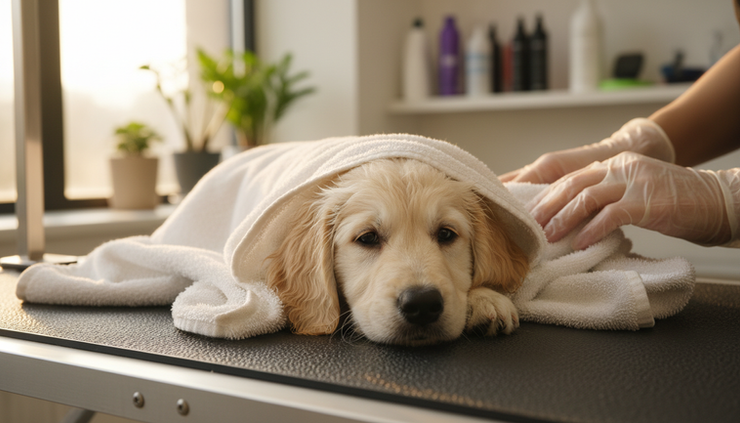
Use calming techniques for anxious puppies
An anxious puppy is not being naughty. They are communicating that something feels new, confusing, or too intense. The best response is calm support, not pressure.
Before the appointment, give your puppy a chance to burn off a little energy. A short sniffy walk can help settle the body and mind. Avoid exhausting your puppy, as overtired puppies can become more reactive.
Bring familiar items if the salon allows it. A small blanket that smells like home, a favourite treat, or a familiar chew can offer comfort.
During handover, keep your own goodbye calm and brief. Long emotional farewells can make some puppies worry more. A relaxed “see you soon” helps signal that everything is normal.
Helpful calming methods include:
Taking slow breaths and keeping your own voice relaxed
Rewarding calm standing, sitting, and gentle sniffing
Letting the puppy investigate safe objects at their own pace
Asking the groomer to use breaks when needed
Keeping sessions short for the first few visits
Avoiding punishment, scolding, or forced stillness
Some puppies also respond well to calming pheromone products, compression-style garments, or vet-approved support for severe anxiety. If your puppy panics, trembles heavily, snaps, or cannot recover after a grooming attempt, speak with a vet or a qualified force-free trainer. Grooming should be built in small steps, not treated as a battle.
Watch for stress signals
Puppies do not always bark or cry when they feel worried. Subtle body language can appear first.
Common stress signs include:
Lip licking when no food is present
Yawning outside of tiredness
Turning the head away
Tucked tail
Trembling
Whale eye, where the whites of the eyes show
Trying to climb away or freeze
Panting when not hot
A skilled groomer will notice these signs and adjust. Sometimes that means changing tools. Sometimes it means pausing, using more treats, or ending the session before the puppy becomes too distressed.
Ending on a calm note is far better than forcing a full groom that leaves the puppy frightened for next time.
Make positive reinforcement part of every grooming routine
Positive reinforcement means rewarding the behaviour you want to see again. In grooming, that might be standing calmly, allowing a paw to be touched, accepting the brush, or staying relaxed near the dryer.
Rewards can include treats, praise, gentle pats, a break, or a small play session. Food works especially well for many puppies because it is clear and immediate.
Use simple steps:
Touch the brush to your puppy’s side.
Give a treat.
Brush once.
Give a treat.
Pause before your puppy wriggles away.
Repeat later.
This approach teaches the puppy that grooming predicts good outcomes. Over time, the treats can become less frequent, but praise and calm handling should stay.
After the salon visit, keep the rest of the day quiet. Your puppy may be tired from all the new experiences. Offer water, a toilet break, a comfortable nap spot, and gentle affection.
Check your puppy’s behaviour over the next few hours. A little sleepiness is common after an exciting outing. If you notice ongoing discomfort, skin irritation, repeated scratching, limping, or unusual distress, contact your groomer or vet for guidance.

Keep the momentum going after the first visit
The first groom is only the beginning. Puppies benefit from regular, gentle handling between salon appointments. This keeps their coat healthier and helps each future visit feel familiar.
Ask your groomer how often your puppy should come in. The answer will depend on coat type, lifestyle, and how much brushing happens at home. Curly and long-coated puppies often need more frequent maintenance than short-coated breeds.
At home, build a routine that suits your puppy’s attention span. Two minutes each day is better than a stressful marathon once a week.
Focus on these habits:
Brush areas that mat easily, such as behind the ears, under the collar, armpits, chest, tail, and legs
Check paws after walks, especially in wet or grassy areas
Handle ears gently without poking inside
Reward calm behaviour around grooming tools
Keep sessions short, cheerful, and predictable
If the first salon visit did not go perfectly, do not panic. Many puppies need several visits before they fully relax. Progress might look like accepting the bath one month, tolerating the dryer better the next, then standing calmly for a trim later on.
A calm grooming journey is built through trust. Choose a kind groomer, prepare your puppy in small steps, and reward bravery often. With time, the salon can become just another normal part of life, one that keeps your puppy comfortable, healthy, and ready for cuddles.
Top Dog Grooming Services - Lush Pet Care

Comments